Industry 4.0 for SMEs: How Smart Manufacturing Drives Small and Medium-Sized Businesses
When people talk about Industry 4.0, digitalization, and smart factories, it's common to think of large automotive corporations or the multinational automakers operating in the industrial parks of Saltillo and Monterrey. There's a widespread myth that digital transformation is the exclusive domain of companies with multimillion-dollar budgets and massive IT departments.
The reality is completely different. In today's competitive environment, Small and Medium-Sized Enterprises (SMEs) that act as suppliers in the supply chain (Tier 2, tooling, packaging, or industrial services) face the same demands for quality, traceability, and speed as the industry giants. For an SME, adopting Industry 4.0 technologies isn't a luxury; it's the most effective strategy to optimize resources, reduce operating costs, and secure long-term commercial contracts. In this article, we look at how SMEs can implement smart manufacturing in a scalable, affordable, high-impact way.
What Does Industry 4.0 Mean for an SME?
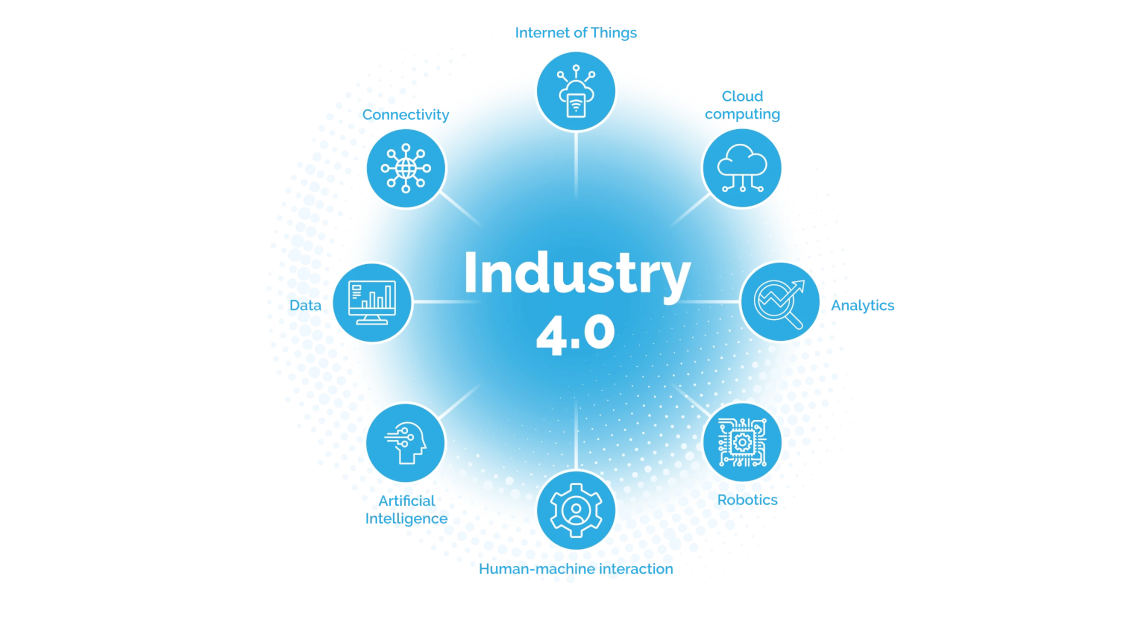
For a small or medium-sized business, Industry 4.0 doesn't mean replacing all its machinery with state-of-the-art autonomous robots. It means connecting and making better use of what you already have. It involves integrating inexpensive sensors, custom software, and visualization tools so that data from the shop floor or production lines flows in real time to decision-makers.
The great advantage SMEs have over global corporations is agility. With leaner, less bureaucratic organizational structures, an SME can test, adapt, and implement technology solutions much faster, achieving a return on investment (ROI) in considerably shorter timeframes.
Affordable, Cost-Effective Industry 4.0 Technologies
Industrial digitalization is modular. An SME can and should move forward step by step, prioritizing the technologies that solve its most urgent operational pain points:
1. Low-Cost Industrial Internet of Things (IIoT)
There's no need to scrap older ("legacy") machines. By installing external temperature or vibration sensors or optical counters connected to industrial wireless networks, an SME can monitor the status and pace of conventional machines without altering their internal systems.
2. Mobile Applications for Operations
Eliminating paper is the cheapest step with the greatest immediate impact. Replacing manual logbooks with mobile apps on off-the-shelf tablets lets operators record stoppages, maintenance checklists, or quality inspections right at the source, eliminating hours of re-entry in Excel.
3. Real-Time KPI Dashboards and Indicators
Centralizing information on simple visual displays on the shop floor lets the team react instantly. Automatically measuring basic indicators such as OEE (Overall Equipment Effectiveness) or scrap brings the SME's operating standards up to the level of its multinational customers.
4. Business Intelligence (BI) and Cloud Storage
Cloud computing gives SMEs access to robust servers and databases on a pay-per-use basis, avoiding costly investments in on-premises IT infrastructure. Tools such as Power BI make it possible to consolidate sales, inventory, and production reports automatically.
Strategic Benefits: From Local Shop to Global Supplier
- Certification and Commercial Trust: Presenting production dashboards and automated traceability reports is a powerful calling card in audits by Tier 1 customers and OEMs in Monterrey and Saltillo.
- Maximizing Current Assets: Before buying a new machine that strains cash flow, digitalization reveals the "hidden capacity" of your current equipment by drastically reducing downtime.
- Lower Costs from Human Error: Automating data capture and guiding operators with intuitive visual interfaces (UI/UX) reduces error rates, rework, and quality claims.
A 3-Step Implementation Roadmap for SMEs
- Identify the Bottleneck: Don't try to digitize the entire company at once. Select the process or machine that causes the most headaches (delays, mechanical failures, or excess scrap) and start there as a pilot project.
- Develop Scalable Solutions: Avoid generic off-the-shelf software that makes you pay for features you don't need. Opt for custom software development or specific modules that grow at the pace of your business.
- Train and Listen to Your Staff: The success of technology depends on operator adoption. Involve them from the start and show them that digital tools are there to make their work easier, not to police them.
Conclusion
Industry 4.0 isn't a matter of size but of mindset. Industrial SMEs in northern Mexico that adopt digitalization strategically and intelligently will stop competing on price alone and start competing on efficiency, precision, and reliability, securing their growth in the market of the future.
Want to modernize your SME without breaking your budget?
At LT CODER we understand the challenges facing small and medium-sized businesses in Saltillo and Monterrey. We develop affordable, modular, fast-to-deploy Custom Software, Mobile Apps, and Industrial Dashboards. Take your business to the Industry 4.0 level step by step, with a guaranteed ROI.